
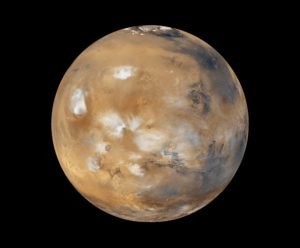
International astronomers on Wednesday announced that the lake about 20 Kilometers (12 miles) wide has been first time found on Mars.
The discovery raising the possibility that more water and may be life exists on this red planet.
Located under the planet’s south polar ice cap, it is the largest body of liquid water ever found on ever found on Mars.
“This is a stunning result that suggests water on Mars is not a temporary trickle like previous discoveries but a persistent body of water that provides the conditions for life for extended periods of time,” said Alan Duffy, an associate professor at Swinburne University in Australia, who was not involved in the study.
The discovery was made using Marsis, a radar instrument on board the European Space Agency’s (Esa) Mars Express orbiter.
The result is helpful for those who are studying the possibilities for life beyond Earth.
“It’s probably not a very large lake,” said Prof Roberto Orosei from the Italian National Institute for Astrophysics, who led the study. “This really qualifies this as a body of water. A lake, not some kind of melt water filling some space between rock and ice, as happens in certain glaciers on Earth.”