
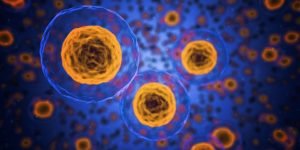
Body of every living organism is made of very tiny structures called Cells. It was British scientist Robert Hooke who first discovered cell in 1655.
Cells not only build body structure but also convert food nutrients into energy. Cells also contain the body’s hereditary material and can make copies of them.
Some organisms like Bacteria and Viruses possess only one cell are called unicellular organisms and many others are multi-cellular posse’s more than one cell.
Cells have many parts with a different function. Some of these parts, called organelles and have specialized structures that perform certain tasks within the cell.
Cells have different shapes like spherical, oval, elliptical, columnar, discoid, polygonal, plate-like etc. The particular shape of cell depends upon its surrounding processes and environment.
It is estimated that a normal human adult contains around 30-40 trillion cells but scientists do not yet know the exact number.