
Nonverbal communication is a process of conveying a message with the help of facial expression, body gestures, the tone of voice and the physical distance between the communicators.
Sometimes nonverbal communication proves helpful in classroom communication. It is a better way for students to communicate for their needs.
They’re also the simplest way for teachers to get a message across quickly and quietly.
Here are eight such signals:

1. Attention
This signal is called Silent Coyote and is used to signal for attention. When the teacher shows the class the signal, students should stop talking, turn their eyes to the teacher, and return the signal.

2. Check yourself
Known as Give Me Five, this signal cues students to check that one, their eyes are looking; two, their ears are listening; three, their mouth is shut; four, they are sitting cross-legged; and five, they have their hands to themselves.

3. Bathroom break
Students can simply flash the Crossed Fingers signal to the teacher, wait for a thumbs-up, and be off to take care of their business.
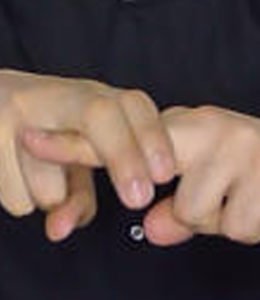
4. Sit down
This is an American Sign Language signal used to remind students to quietly have a seat.

5. Yes, no, wait, I agree
The thumb is a flexible tool for signalling in the classroom. Thumbs-up signals yes, thumbs-down signals no, and thumb turned sideways can mean wait. In addition, students can hold a thumbs-up to their chest to silently signal that they agree, which is especially helpful during circle time when kids tend to blurt out their opinions and stories.

6. Thank you
Another American Sign Language gesture, this signal can show your students that you appreciate it when they respond to your direction or when they’re doing a good job at a task.
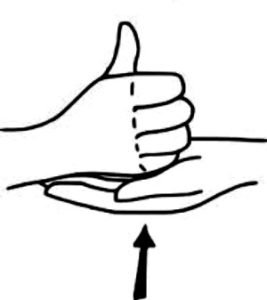
7. Help
Instead of raising their hand for the whole class to see, students can use this unobtrusive signal to show that they need further instruction or assistance. This signal is particularly helpful during circle time when students are seated in close proximity.
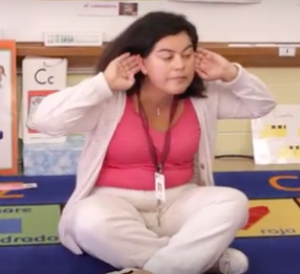
8. Listen
This signal helps students focus on listening to the speaker. It’s great when you don’t need to quiet the whole group but need to give a gentle reminder to an individual or small cluster of kids.